
Lamb Marking & Mulesing in the Riverina
We're a hands-on rural contracting team with a genuine background in sheep work. From livestock services to equipment supply, we bring real on-farm experience to everything we do.
Since 2002
Family Rural Background
100,000+
Sheep Handled (last 12 months)
Australia-Wide
Equipment Sales
Real On-Farm Experience
Hands-On Product Knowledge
Riverina Based Contractors
Australia-wide Equipment Sales
Getting Lambs Marked Right the First Time
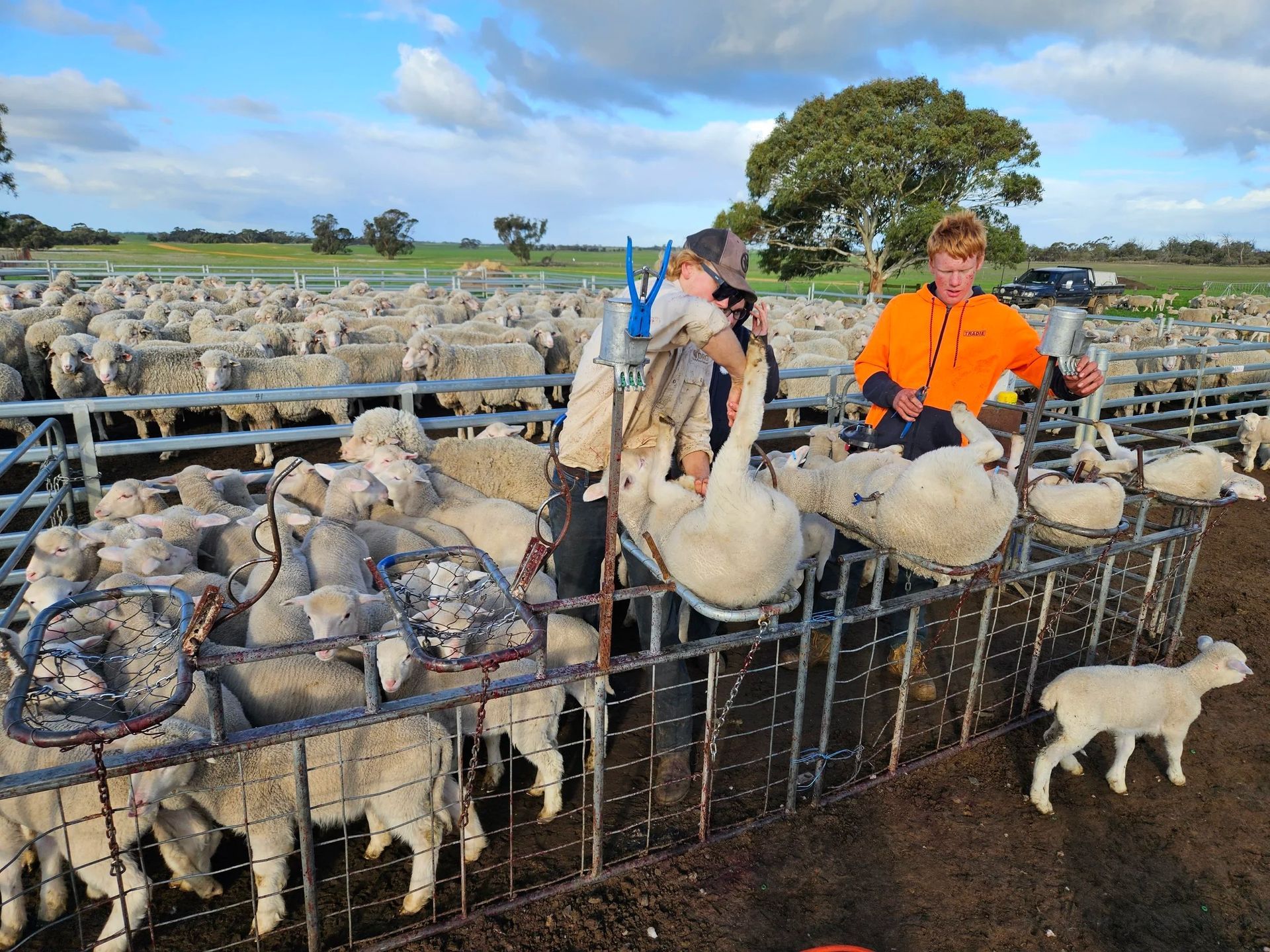
Lamb marking season is one of the busiest and most time-sensitive periods on the calendar, and having a reliable team on hand to get through the mob efficiently makes a real difference. At Dusty Rural Contracting, we provide professional lamb marking and mulesing services to sheep producers across the Riverina and the surrounding region. We carry out all aspects of the marking process including tailing, castrating, ear tagging, mulesing and vaccinating, working methodically through the mob to keep handling stress low and get the job done to a high standard.
Our team understands the importance of doing this work properly the first time around, both for the welfare of the animals and for the long-term productivity of your flock. If you need an experienced lamb marking team on your property this season, call Dusty Rural Contracting today on 0438 789 964.
Frequently Asked Questions
What is lamb marking?
Lamb marking is handling young lambs in one yarding for tasks like tail docking, ear tagging/ID, castration of male lambs not kept for breeding, and health treatments such as vaccination.
What is the right age to mark lambs?
Most producers aim to mark lambs between two and six weeks of age, with four weeks being a commonly preferred window for many Merino operations. Marking within this range keeps lambs manageable through the cradle while reducing the risk of mismothering that can come with very early marking. Conditions on the day matter too, and most experienced contractors will flag if weather or mob condition suggests adjusting the timing slightly.
Does mulesing actually make a difference to flystrike rates?
For Merino and Merino-cross producers, mulesing remains one of the most effective long-term tools available for reducing breech flystrike. When carried out correctly at marking, it creates a smooth skin surface around the breech that is far less attractive to blowflies than wrinkled or heavily woolled skin. Combined with regular crutching and jetting through high-risk periods, mulesed sheep consistently show lower rates of breech strike than unmulesed animals across the life of the flock.
Should I separate marked lambs from the rest of the flock afterwards?
In most cases, returning marked lambs to their mothers as soon as possible after the job is the best approach to minimise mismothering and help lambs recover quickly. Keeping the mob in a familiar paddock with good feed and shelter for the first few days after marking gives lambs the best conditions to recover well. Some producers prefer to hold the mob in a smaller paddock for the first day or two to make it easier to monitor for any animals that need attention after the procedure.
What's done at lamb marking?
Typically tail docking, applying ear tags/EID, castrating ram lambs, vaccinating, and usually a pain-relief step. Mulesing may also be done at this time on some operations.
Why is lamb marking important?
It protects lamb health, allows identification and record-keeping, and manages breeding. Done well and early, it sets lambs up to grow out cleanly.
Send Us a Message
Thank you for contacting Dusty Rural Contracting.
We will be in touch soon.
Please try again later.
Marking Properly Pays Off All Season
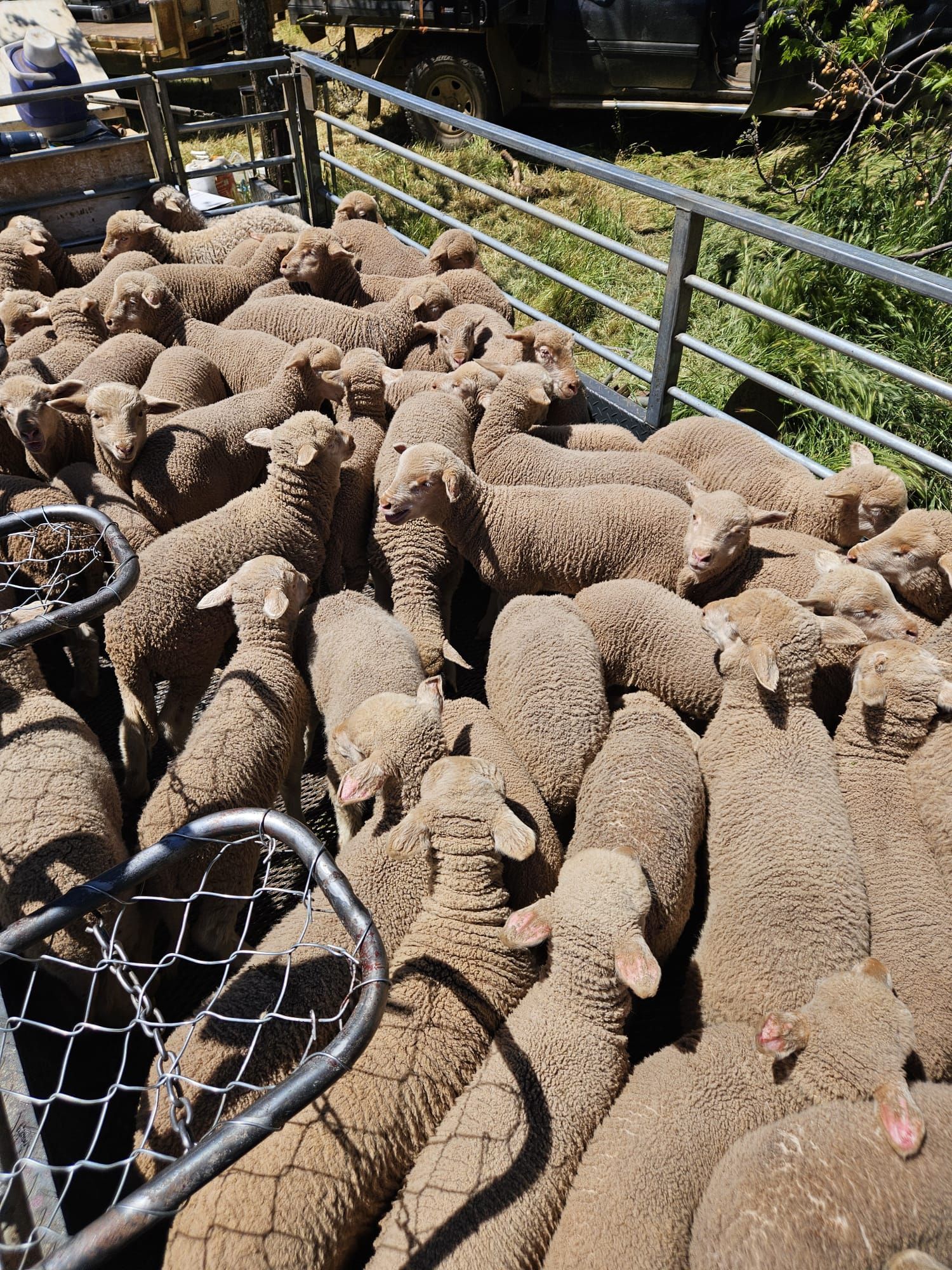
Getting lamb marking and mulesing right sets your flock up for a healthier, more productive season. A well-run marking job covers more than just the basics:
- Tailing and castrating carried out cleanly and efficiently to minimise recovery time
- Mulesing performed correctly to provide long-term flystrike protection around the breech
- Ear tagging and EID recording to keep your flock data accurate and up to date
- Vaccinating at marking time to protect lambs against the most common clostridial diseases
- Calm, low-stress handling through the cradle to keep the mob settled and moving freely
A thorough marking job done at the right time and to a proper standard means less to follow up on later in the season and a stronger, healthier drop going into their first summer.


